What does the lowest to highest rank Valorant challenge reveal about climbing?
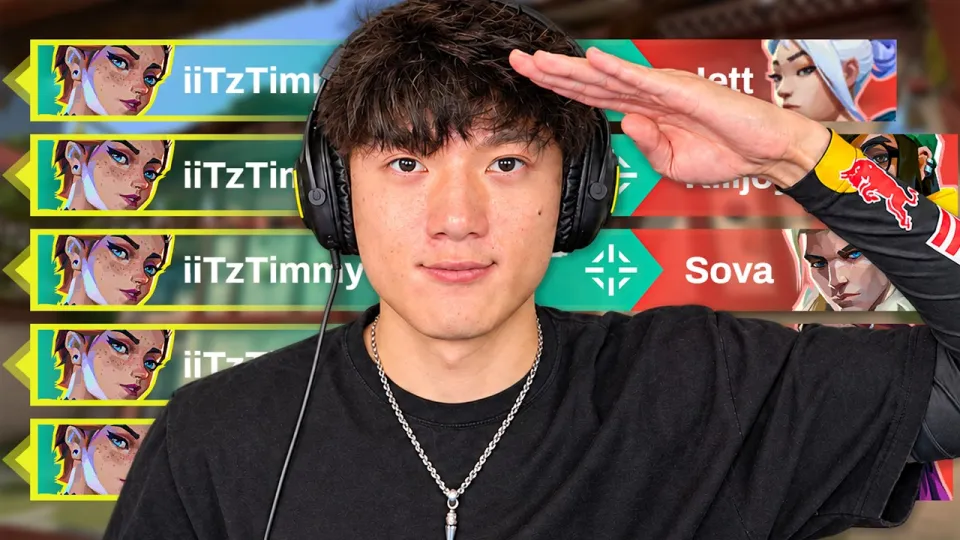
Video: I Might Be Getting TOO Good at Valorant… (Lowest To Highest Rank Challenge)
You can order the same kind of articles for your own video to boost it on YouTube and Google. Just message the Telegram bot @sat_sit_bot. It writes articles around your video, embeds the video and publishes them on popular niche websites (no ads). Your first 50 articles are free.
· based on the channel iiTzTimmy Two
The lowest to highest rank Valorant challenge is a climb from the bottom of the ranked ladder toward Radiant, and it works as a stress test of how much a single highly skilled player can influence low-elo games. In the iiTzTimmy Two video, the run doubles as a showcase of aim, movement and mental fortitude, plus a look at how random teammates react when someone far above their level drops into the lobby. You can watch the full stream live at iiTzTimmy's Twitch channel, where the ranked grind continues outside the edited upload.
What the lowest to highest rank Valorant challenge actually is
The format is simple: a player who normally sits near the top of the ladder starts a fresh account or a low-rated one and plays ranked until the rank reflects their real skill. Valorant's rank system spans Iron, Bronze, Silver, Gold, Platinum, Diamond, Ascendant, Immortal and Radiant, with three divisions inside most tiers. A climb from Iron to Radiant therefore requires dozens of wins, consistent performance ratings and enough games to let the hidden MMR catch up with visible rank.
What makes the format interesting is the friction. Low-elo lobbies are not just weaker mechanically; they are louder, more chaotic and often less communicative in useful ways. A player with Radiant-level crosshair placement still has to deal with teammates who push alone, ignore rotations or misread the minimap. The challenge is less about proving you can aim and more about proving you can win when the game around you is unpredictable.
How the climb plays out in iiTzTimmy Two's run
In the video, the early matches set the tone: the streamer's individual impact is obvious, but the games are shaped by teammate behavior as much as by enemy skill. The standout example is a Cypher player who repeatedly makes aggressive first entries into site, then blames the rest of the team when the trade does not happen. The same player also complains about missing comms while apparently not tracking what teammates are actually calling — a pattern that shows up in low ranks far more often than raw aim problems.
A later lobby takes a different turn. Opponents recognize the name and play noticeably hungrier, peeking wide and chasing duels they would normally avoid. That reaction is a recurring feature of any road to Radiant run: the higher your profile, the less anonymous your low-rank games become, and the more enemies treat every round like a highlight reel.
Why aim alone does not decide low-elo games
Aim is the fastest lever a strong player has in low ranks, but it is not the only one. Three factors consistently decide whether a smurf-style climb turns into a win streak or a grind:
- Round structure. Taking first contact and surviving it beats trading kills evenly. A player who opens a site and stays alive forces rotations and creates numbers advantages.
- Economy discipline. Low-elo lobbies often over-force after a loss. Holding credits, buying with the team and calling a save can flip several rounds per match without a single extra frag.
- Information control. Simple, repeated callouts — where the enemy was seen, how many, which utility was used — matter more than elaborate strategies nobody executes.
The Cypher situation in the video illustrates the inverse: a player who invents callouts, criticizes teammates mid-round and tilts after a lost pistol is actively reducing their own team's odds. Mentality is a mechanic in Valorant, and it scales harder at the bottom of the ladder than most players admit.
The smurf question the challenge always raises
Every lowest to highest rank Valorant series runs into the same objection: is it fair to put a top-tier player into games with Iron and Bronze opponents? The honest answer is that it is not competitive in the traditional sense — the outcome of individual duels is close to predetermined. What the format does offer is educational value: viewers see how a high-level player reads rotations, holds angles and converts advantages, which is hard to learn from matches between equals.
The flip side is the experience of the opponents. When a lobby realizes who they are facing, reactions range from excitement to frustration, and some players simply stop trying. That dynamic is visible in the video's later games, where enemies chase duels with more aggression than sense. For players trying to climb legitimately, the practical takeaway is to ignore the outlier account and focus on their own decision-making rather than the scoreboard.
What viewers keep asking about the run
The comments under the upload cluster around a few recurring themes, and they map neatly onto questions anyone watching a high-rank climb tends to have. One is sensitivity and DPI: players want to copy settings, but the more useful lesson is that a top player's mouse setup is tuned to years of muscle memory, not a shortcut to better aim. Another is the perception that the streamer's ACS barely moves between matches — a reminder that combat score is an average, not a live meter, and small round-to-round swings are normal.
A third theme is the visible gap between ranks. Viewers comparing their own Gold or Platinum lobbies to what appears on screen notice faster rotations, cleaner trades and fewer wasted ultimates. That gap is real, but it is built from small habits rather than raw talent: checking corners, playing off contact, and not re-peeking the same angle twice. The most repeated observation, though, is about attitude — the contrast between a teammate spiraling over comms and a Reyna calmly making the right play is the video's most transferable lesson.
Useful links
- iiTzTimmy on Twitch — live ranked streams and the full climb
- iiTzTimmy on Twitter — schedule and updates
- iiTzTimmy on Instagram — clips and behind-the-scenes posts
- iiTzTimmy on TikTok — short highlights
- iiTzTimmy Discord — community and queue talk
The takeaway from a Radiant player in low ranks
The lowest to highest rank Valorant challenge is entertaining precisely because it exposes the parts of the game that rank does not measure: patience, communication and the ability to stay level when a teammate is falling apart. iiTzTimmy Two's edit shows a climb where mechanical skill is never in doubt, but the matches are still decided by structure and mood. For anyone stuck in a lower tier, the useful lesson is not the aim — it is the discipline to make the simple call, hold the simple angle and let the round come to you. If you want to see how the run continues, follow along live on Twitch.
Key takeaways
- The challenge: start from the bottom of the ranked ladder and climb toward Radiant, the highest Valorant rank.
- iiTzTimmy Two frames the run as a test of whether raw aim alone can carry games at low elo.
- The clip's first match centers on a Cypher teammate who blames the team and invents callouts instead of listening.
- A later lobby reacts to the streamer's presence, showing how quickly smurf accounts get recognized.
- Community comments split between enjoying the stomps and questioning the fairness of high-skill players in low ranks.
Source: I Might Be Getting TOO Good at Valorant… (Lowest To Highest Rank Challenge) · Markdown version
Questions & answers
How long does an Iron to Radiant Valorant climb usually take?
There is no fixed number, because visible rank moves slower than hidden MMR. A player winning most games with strong individual ratings can skip divisions and reach high Diamond or Ascendant within a few dozen matches, but the final stretch toward Immortal and Radiant requires sustained win rates against opponents of similar skill.
Is the lowest to highest rank challenge considered smurfing?
Technically yes, since a highly ranked player competes in lobbies far below their level. Most creators frame it as entertainment and education rather than fair competition, and the matches themselves are rarely close. Riot's rules on account sharing and boosting apply, so the format usually relies on the player's own alternate account.
Do mouse sensitivity and DPI settings matter for climbing?
They matter less than most players think. A comfortable sensitivity that allows precise micro-adjustments and consistent tracking is enough; copying a pro's exact DPI without the same mouse, pad and grip usually hurts more than it helps. Consistency in practice matters far more than the number itself.
Why do high-rank players still lose games in low elo?
Because Valorant rounds are decided by more than duels. A strong player can win most aim fights and still lose to poor economy management, teammates who over-extend, or a lobby that plays unpredictably. Individual impact is high but not absolute, which is exactly what makes the challenge worth watching.